Co-parenting from separate households requires more than financial alignment; it demands spiritual unity. Before your child commits to AAU, fast and pray together using the HEARTH framework. This six-step process anchors both parents in God's character, clears the air honestly, and creates the foundation for a season of peace and aligned decisions.
The Call Comes. Then Reality Hits.
Your child's AAU coach calls with exciting news: they want her on the team. The energy is real. The opportunity feels like the beginning of something big. You hang up, feeling that combination of excitement and responsibility that comes with every athletic commitment at this level.
Then you text your co-parent. And if you're co-parenting from separate households, that moment changes everything. Because now you're not just deciding for yourself. You're trying to decide together when you don't live together, don't see each other daily, and might already be carrying some hurt from the separation.
Most co-parenting conversations about AAU start with the money. Can we afford this? How do we split the costs? Who handles what?
But I've learned something after years of working through this with my daughter's D1 sports journey: if you focus only on the financial side, you're missing the most important part.
Why Your Child Feels the Fracture Before You Do
I'm going to say something that most sports parents won't say out loud: your child's performance is affected by whether her parents are unified.
I do know it's not just psychological, it's spiritual, it is just the way humans are wired. A kid knows her mom and dad are on the same team, even if they don't live together, she plays freer. She makes bolder decisions. She isn't holding tension in her body, wondering whether the adults will fight about sports later.
On the flip side, when a child senses that one parent is hesitant and the other is all in, or when she hears different things from each household about whether this season is really happening the way they said it would, that fracture shows up on the court.
It shows up in her confidence. In her willingness to take risks. In how she carries herself around the other players and coaches.
That unity is a gift you give her. But when you're co-parenting from separate households, that unity doesn't happen by accident. You have to build it intentionally. And the most powerful way I've found to do that is through prayer and fasting.
What Fasting Actually Means
Before I explain how we use fasting in the co-parenting conversation, let us be clear about what fasting is and what it's not.
Fasting is not about deprivation for the sake of suffering. It's about intentionally setting aside something you normally enjoy for a specific period of time. That sacrifice creates space, mental, spiritual, and emotional, to focus on something bigger than your daily routine.
What I have learned in my spiritual walk
I attended Pastor and Bishop Brady’s church for years and this is what I have learned in my walk from Pastor Brady. Pastor Sheryl Brady teaches on the power of spiritual disciplines in families. She points out that when families fast together, they're not just depriving themselves, they're creating a moment where God can speak clearly and both parties can hear Him simultaneously.
In the context regarding co-parenting an athlete, fasting says something powerful without you having to say it: This decision matters enough that I'm going to set aside my own comfort to get aligned on it.
How We Actually Do This
Before my daughter committed to any AAU team, her dad and I would agree on what we would fast from and for how long.
In some seasons, we fasted from food for a full day. In other seasons, we fasted from social media for three days. One season, we both committed to fasting from entertainment (no TV, no streaming, no distractions) for 24 hours before we had the financial conversation.
The specific thing doesn't matter as much as this: you both agree on what you're fasting from, and you both do it at the same time.
When you're co-parenting from separate households, synchronized fasting is important. You're not texting each other about how hungry you are or how hard it is. You're both experiencing the same sacrifice at the same time, which creates a strange kind of togetherness even though you're physically apart. That shared encounter becomes the foundation for the prayer that follows.

Then You Pray: The HEARTH Framework
After the fasting period, you and your co-parent get on a call and pray together. Not a vague, general prayer. A structured prayer that moves through specific components so nothing gets missed.
This is where the Family Stewardship Meeting System introduces the HEARTH framework, a six-step guide created to invite God into your co-parenting dynamic.
H — Honor His Character
You begin by anchoring your minds in who God is. Before asking for anything, focus entirely on His nature: His absolute goodness, His sovereignty, His power, and His unwavering faithfulness. You are praising His character, not just His actions.
Fill-in prompt: Heavenly Father, we look to You today and honor You because You are ___________________
Co-parenting Example: "Heavenly Father, we look to You today and honor You because You are a God of order, a healer of fractured relationships, and the ultimate protector of our child's future."
What I have learned in my spiritual walk
Bishop Dr. Lester Wood Jr. is the Bishop and founder of my home church. Dr. Lester and Christine Woods are a powerhouse. Bishop Lester Woods Jr. teaches that honoring God's character is the foundation of all effective prayer. When you honor who He is first, you position yourself and your co-parent under His authority, which shifts the entire dynamic of your conversation from adversarial to collaborative.
E — Examine and Confess
This step requires absolute transparency. Together, you bring real honesty to the table. Where have you both fallen short? What hidden resentments, stubborn pride, or lingering hurts are stalling your teamwork? This is where you clear the air and ask for relational repair.
When co-parents confess their part in the fracture, they remove the barriers that keep God from moving.
Fill-in prompt: Lord, we lay down our defenses and confess our ___________________
Co-parenting Example: "Lord, we lay down our defenses and confess our pride, our fear of losing control, the hurts from our past separation, and the times we've made independent decisions without respecting each other's voice."
What I have learned in my spiritual walk
Chicago is where all of my childhood memories reside. Pastor John F. Hannah, who leads a ministry in Chicago, emphasizes that confession is not an indication of weakness; it's the pathway to power. He teaches that unconfessed hurt between parents creates a spiritual block that affects the entire family system, including the child's athletic performance and confidence. Pastor Hannah's teaching style hits home and resonates in the soul.
A — Ask with Boldness
Now, present your specific, real needs to God. Scripture encourages us to ask, seek, and knock. This is the moment to request precise guidance on upcoming sports decisions, schedule changes, monetary boundaries, and emotional support for your child.
When you come before God asking for what your family needs, you come with the full weight of your parental assignment. You don't apologize for needing help. You don't minimize your request. You ask boldly because your child's future is at stake, and God honors that kind of faith.
Fill-in prompt: Father, we come to You today seeking specific guidance for ___________________
Co-parenting Example: "Father, we come to You today seeking specific guidance for this upcoming sports season, clarity on our joint financial restrictions, and absolute unity in how we communicate schedule changes to our child."
What I have learned in my spiritual walk
I will never forget my first encounter with Pastor Jamal. He was a guest speaker at a conference hosted by my home church, Urban Empowerment, in Columbia, MO. He preached until the holy ghost saturated the atmosphere. Pastor Jamal Bryant has taught extensively on the power of bold asking. He teaches that God does not honor timid prayers.
R — Recognize His Goodness
Shift your focus to active gratitude for what God has already done. Look back at the concrete evidence of His grace, mercy, and provision in your lives and in your child's life.
It's about positioning yourself to see what God has already done while you're still in the middle of what you're asking Him to do. Gratitude shifts your perspective from lack to abundance, even when the circumstances haven't changed yet.
Fill-in prompt: We halt to express our deep gratitude for ___________________
Co-parenting Example: "We take time to express our deep gratitude for our child's health and talents, for the fact that we can peacefully co-parent across two households, and for the community of mentors surrounding her."
What I have learned in my spiritual walk
Pastor William Murphy teaches about the transformative power of gratitude in the midst of difficulty. He emphasizes that recognizing God's goodness is not about overlooking your pain or current struggle. Not only is he a Bishop and teacher, but he is also a songwriter. His music will lead you into deep worship.
T — Trust His Timing
This step shifts your perspective from hope to active faith. You are thanking God in advance for the answers on the way, even if you cannot yet see the way forward. It is a declaration that you trust His sovereignty more than your own doubts or anxieties.
You're exercising the kind of faith that moves mountains. You're telling God that you trust His timeline more than you trust your fear, and that trust is what opens the door for His intervention.
Fill-in prompt: Lord, we thank You in advance for how You are already working in ___________________
Co-parenting Example: "Lord, we thank You in advance for the peace You are building between our homes, the wisdom that will guide our choices this season, and the emotional toughness growing inside our child."
What I have learned in my spiritual walk
Bishop Dr. Lester Woods Jr. speaks powerfully on faith as the substance of things hoped for. He teaches that when you thank God in advance, you're not being naive or pretending the problem doesn't exist.
H — Hand Over the Outcome
You close the prayer by completely surrendering the results. You have honored Him, confessed your struggles, asked for help, given thanks, and declared your faith. Now, you release the entire situation into His hands.
When you surrender an outcome to God, you're saying, "I've done my part. I've been honest. I've asked. I've given thanks. Now I rely on You completely with what comes next." This is when peace enters the co-parenting dynamic, because neither parent is trying to control the other or the outcome anymore.
Closing Line: We place this entire season into Your hands, releasing our need for control, and trusting Your perfect will. In Jesus' name, Amen.
What I have learned in my spiritual walk
Pastor Sheryl Brady teaches that surrender is not passivity. It's the most active thing you can do as a parent.
Scripture That Anchors This Practice
The Bible has a lot to say about fasting, prayer, and unity. Here are the scriptures I lean on most:
- Esther 4:16. Esther called a fast when facing an impossible decision. She knew unified fasting created the spiritual foundation for what came next. When the bets were highest and the outcome was uncertain, she didn't respond with panic. She responded with prayer and fasting, and she invited others to join her in that spiritual discipline.
- Joel 2:12-13. Fasting is a physical way of returning to God with your whole heart. It signals genuine repentance and genuine desire for His intervention. When co-parents fast together before a major decision, they're saying, "This matters enough that we're willing to be uncomfortable together in pursuit of Your wisdom."
- Matthew 6:16-18. Your fasting is between you and God. He sees the alignment you're building. You don't do this for recognition or approval from anyone else. You do it because your child, your family, and your co-parent relationship matter enough to invest in them spiritually.
- Acts 13:1-3. Unified fasting and prayer created the space for God to speak a clear direction. When the church fasted and prayed together, the Holy Spirit moved. Direction came. Clarity surfaced. This is what happens when believers align themselves spiritually around a common purpose.
- 1 Peter 3:7. When you're unified, even as co-parents, your prayers have power. When there's a fracture, prayers get blocked. This verse reminds us that our relationships directly affect our spiritual effectiveness. That's why honoring your co-parent and working toward unity isn't optional; it's foundational.
When You're in a Blended Family Situation
If you're in a blended family, keep this as your foundation. Here's how to expand it:
The biological co-parents fast and pray together first, using the HEARTH framework. This creates the spiritual alignment you need. Then, each of you takes that unified energy back to your current household. If you're currently married or partnered, your spouse becomes aware of your decision and understands that it came from a place of spiritual groundedness, not conflict.
Your current spouse can support the decision even if they weren't in the fast and prayer themselves. They can see that the decision came from intention and agreement, not chaos.
What I have learned in my spiritual walk
Pastor Sheryl Brady teaches extensively on blended family dynamics and stresses that spiritual alignment between biological co-parents actually protects and strengthens the entire blended family system.
The Hardest Part (And Why It Matters Most)
I'm going to be honest with you: fasting and praying with your co-parent when you're not together is uncomfortable. It requires vulnerability. It requires setting aside ego and pain.
When you're co-parenting from separate households, there's almost always some hurt underneath the surface. Hurt about the separation. Hurt about feeling unsupported. Hurt about missing time. Hurt about having to coordinate with someone you didn't plan to be working with forever.
That hurt doesn't disappear when you fast and pray. But something shifts. You move from operating in the hurt to operating in faith. You choose God's way, because you know His power! Not because the hurt is gone, but because your child is a gift from God and He is trusting you with the gift.
That choice to fast, to pray, to unify despite the pain, that's what your child needs to grow. Covering must come from both parents in this sport journey. That's what changes how she plays and how she moves through the world. Your covering protects her from the enenmy and we all are seeing first hand how busy the enemy is.
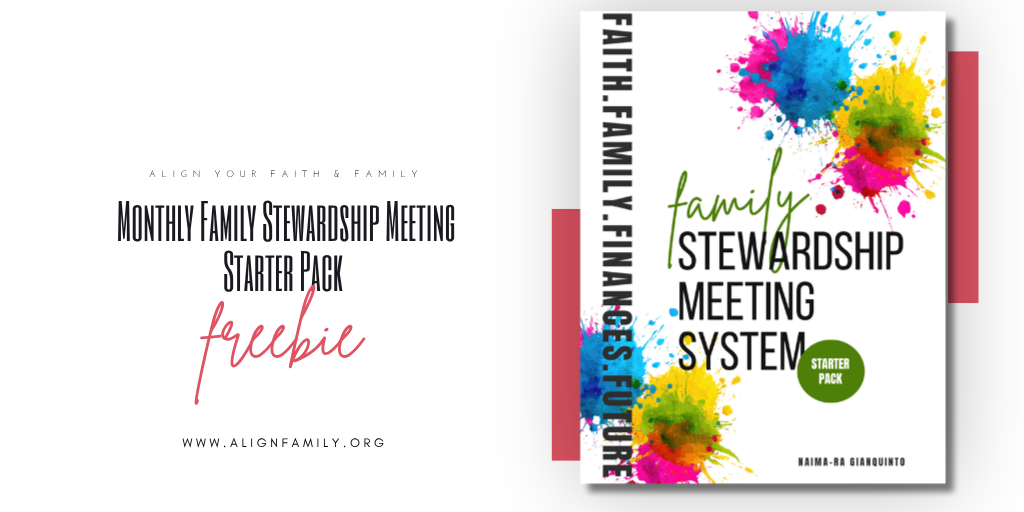
Download Your Free Family Stewardship Meeting Starter Pack
Get the complete HEARTH framework with fill-in prompts, guidance on creating a unified fast with your co-parent, and the financial conversation framework to follow. Ready to use before your next AAU decision.